How to Choose a Commercial Photographer in San Antonio
Short answer: choose the photographer whose recent, relevant work matches your project, whose production plan fits your site and schedule, and whose quote clearly defines deliverables and usage rights. For a San Antonio business, the right fit may be an individual photographer, a dedicated commercial studio, or a broader creative agency. The best choice depends on the work, not on a generic ranking.
Start with the assignment, not the vendor list
Write a one-page brief before contacting photographers. State what you need photographed, where the images will appear, how many locations or products are involved, and when your marketing team needs the files. An industrial manufacturer may need equipment, people at work, and facility-wide views. A hotel may need rooms, amenities, food, exterior views, and guest-experience images. A product team may need consistent catalog angles, packaging details, and lifestyle scenes.
The clearer the brief, the easier it is to compare proposals. Ask each provider to identify assumptions about access, styling, models, travel, retouching, file formats, and usage. A commercial photographer should be able to turn a business objective into a practical shot plan.
Compare a studio with an agency
A commercial studio is often a strong fit when you need hands-on photography, controlled lighting, a consistent visual style, or a photographer who can work directly with your marketing lead. A studio may shoot in a controlled space or travel to your facility, hotel, showroom, or job site. This structure can keep creative decisions and production communication close together.
An agency may be the better fit when photography is one part of a larger campaign. Agencies can coordinate brand strategy, copy, design, media, video, and multiple suppliers. That broader service can be valuable, but it may also mean more layers, a larger minimum scope, or a different person managing the shoot.
Ask who will develop the concept, who will be on set, who owns client communication, and whether outside photographers or stylists will be used. Do not assume that “agency” means full-service production or that “studio” means limited creative support. Confirm the actual team for your assignment.
Evaluate the commercial portfolio closely
Look for a full project in your category, not just a gallery of highlights. A portfolio for industrial photography should show the provider can handle scale, mixed lighting, active work areas, and visual storytelling without losing technical detail. Ask how the team approaches facility rules, personal protective equipment, restricted areas, and confidentiality. Those are project requirements to verify, not credentials to assume.
For hotel photography, review interiors, exteriors, amenities, food and beverage, and images that communicate the guest experience. Ask how the photographer manages changing daylight, reflections, room preparation, and brand standards. For product photography, inspect edge quality, color consistency, reflections, labels, texture, and repeatability across a product line. Ask to see images delivered for the intended channel, such as a website, catalog, marketplace, campaign, or sales presentation.
Style matters, but usefulness matters more. Can the images support a landing page, a trade-show display, a sales deck, social media, and a print piece? Ask whether the portfolio shows both hero images and practical supporting assets.
Check reputation evidence without relying on slogans
Reputation is stronger when several forms of evidence agree. Review testimonials on the provider’s own site, independent reviews where available, professional referrals, and the clarity of the response to your inquiry. Look for comments about communication, preparation, schedule management, and delivery, not only visual praise.
Request references for work of a similar scale when the project is substantial. You can also ask how the provider handles a change in scope, a weather issue, a damaged product, a delayed access window, or a requested reshoot. A written process is more useful than an unsupported claim of being “the best.”
Match production scale to the job
A small product set may need a photographer, lighting, surfaces, and careful retouching. A multi-location industrial or hotel assignment may require assistants, a producer, stylists, a location plan, travel coordination, and a larger post-production workflow. The right provider should explain what the job requires and what can be simplified.
Project need
Questions to ask before booking
Industrial facility
What access, safety, confidentiality, and lighting requirements must be planned?
Hotel or hospitality property
Which spaces, guest-experience details, food, people, and time-of-day views are included?
Product line
How will color, angles, backgrounds, naming, retouching, and file delivery stay consistent?
Multi-location campaign
Who coordinates the schedule, crew, travel, approvals, and backup plan?
Ongoing marketing library
How will new images, usage rights, file organization, and brand consistency be managed over time?
Ask whether the photographer carries backup equipment and how files are backed up. Confirm who supplies props, styling, talent, permits, location access, and post-production. These details affect both the quote and the schedule.
Put turnaround and usage in writing
Turnaround depends on the number of images, editing, retouching, approvals, and production complexity. Request milestone dates for the shoot, proof gallery, selections, revisions, and final delivery rather than accepting an unexplained “fast turnaround.” If a campaign has a launch date, state it in the brief and ask what is realistic.
A commercial quote should also describe image count, resolution, file formats, retouching, delivery method, archive policy, and revision limits. Clarify whether the fee includes web, social, print, advertising, packaging, internal use, territory, duration, and exclusivity. Paying for photography does not automatically answer every copyright or usage question; the written agreement should do that. 1
Consider the relationship after the shoot
If your business publishes regularly, ask how the provider can support the next quarter or year. Ongoing work might include seasonal product updates, new hotel spaces, recruiting and workplace imagery, industrial milestones, or campaign refreshes. A useful partner keeps a consistent visual system while adapting images to new channels.
Before you decide, compare proposals against the same brief. Choose the provider that demonstrates relevant work, asks intelligent production questions, communicates clearly, and gives you terms you can use with confidence. You are buying a working process as well as finished images.
Frequently asked questions
Should I hire a studio or a photography agency?
Choose a studio when direct photography leadership and controlled production are the priority. Consider an agency when you also need strategy, design, copy, media, or several coordinated suppliers. Confirm the actual team and deliverables either way.
What should an industrial photographer show in a portfolio?
Look for comparable equipment, facilities, people-at-work images, lighting conditions, and a clear approach to site access and safety requirements. Ask what must be supplied or approved by your organization.
How do I evaluate hotel photography?
Review complete hospitality assignments that show rooms, amenities, exteriors, food and beverage, and the atmosphere your brand wants to communicate. Ask about room preparation, daylight control, reflections, and shot-list approvals.
What should a product photography quote include?
It should state the number of products and views, backgrounds or styling, retouching, file specifications, delivery schedule, revisions, and usage rights. Confirm how consistency will be maintained across future products.
How quickly will commercial images be delivered?
There is no reliable universal timeline. Ask for a written schedule based on your image count, locations, editing, approvals, and launch date. Rush work should be agreed in writing before the shoot.
What should I send when requesting a quote?
Send the project goal, locations, products or spaces, approximate image count, intended channels, deadline, access constraints, and any brand guidelines. Include reference images if they clarify the desired direction.
Plan your San Antonio commercial project
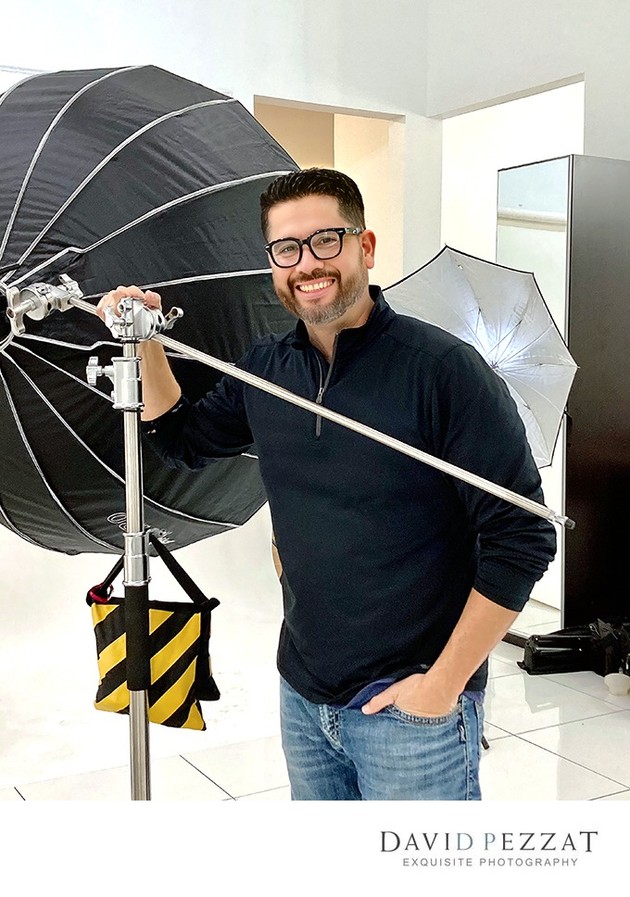
David Pezzat Photographers is a San Antonio-based studio providing commercial photography for business and visual marketing needs.3 To discuss industrial, hotel, product, architectural, or broader brand photography, contact David Pezzat Photographers with your locations, deliverables, schedule, and intended usage. The team can then confirm project fit and prepare a project-specific proposal.
Ready to discuss your commercial photography project?
Share your business goals, locations, image needs, and timeline with David Pezzat Photographers to discuss the right scope for your project.